
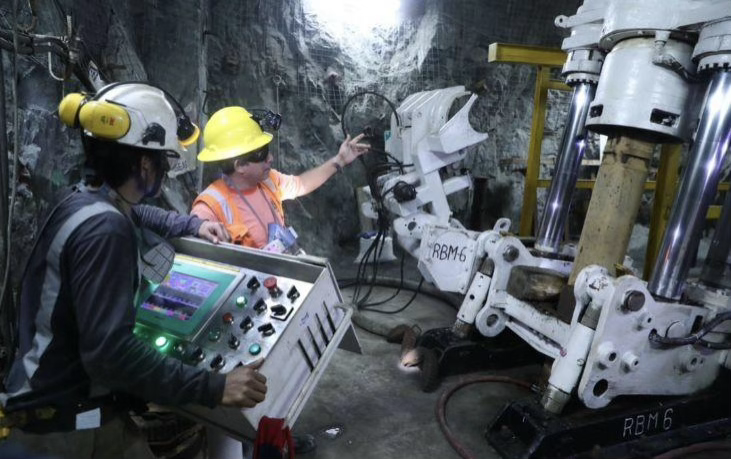
World Mining Congress 2026: Peru Is Getting Ready to Welcome Global Mining Leaders
The Peruvian government has declared the event a matter of national interest. The call for technical papers is currently open. […]
The Peruvian government has declared the event a matter of national interest. The call for technical papers is currently open. […]

Peru will host the prestigious global mining summit for the second time in history. The deadline for technical submissions is

Ulises Neri is a Petroleum Engineer from UNAM and currently Director of Sustainability at Jaguar Exploration and Production. He has held senior leadership roles within Mexico’s Ministry of Energy, including Director of Reserves and Head of the Extraction Unit, and represented Mexico at international organizations such as the OECD, International Energy Agency, United Nations, and OPEC. He serves as Vice Chair for Mexico in the UNECE Expert Group on Resource Management (EGRM).
David Avilés is a Geophysicist with over 25 years of experience in energy project development and investment promotion. He has held senior technical and consulting roles in hydrocarbon exploration and production across Mexico and Venezuela, including leadership positions at Halliburton-Landmark. He currently supports sustainable project development for the International Centre of Excellence for Sustainable Resource Management (ICE-SRM) under UNECE, contributing to the implementation of UNFC and UNRMS standards in Latin America.
Governments, regulators, and mining companies are under increasing pressure to align resource development with decarbonization goals, ESG performance, and the Sustainable Development Goals (SDGs). Designing credible sustainability roadmaps requires more than high-level commitments — it demands structured, internationally recognized frameworks.
This course provides a practical pathway for developing sustainability and decarbonization roadmaps in mining projects using the United Nations Framework Classification (UNFC) and the United Nations Resource Management System (UNRMS). Participants will explore how to integrate geological understanding, technical feasibility, and economic, social, and environmental implications into a unified decision-making framework aligned with the 2030 Agenda and the Paris Agreement.
• The role of extractive industries in advancing sustainability
• ESG vs. SDGs: understanding the right strategic approach
• How to apply UNFC and UNRMS in mining exploration and extraction
• How to design structured decarbonization and sustainability roadmaps
• Methods to align mining projects with global reporting and policy frameworks

Raúl Benavides is a Mining Engineer from the University of Missouri-Rolla and holds a Master’s degree in Mining Management from Pennsylvania State University. He completed the Advanced Management Program at Harvard Business School.
He has held leadership roles across the mining sector, including President of the Peruvian Institute of Mining Engineers (PIME) and Founder and President of the Institute of Mining Safety (ISEM). He is currently President of CETEMIN and has worked at Buenaventura since 1980, serving as director of multiple related companies. His career reflects extensive experience in mining operations, governance, and safety leadership.
As mining operations become increasingly complex, safety management must evolve from reactive controls to predictive, data-driven systems. Artificial intelligence offers new capabilities for anticipating risks before they escalate into incidents.
This course explores how AI can be applied to mining safety through predictive models capable of detecting early warning signals — including equipment faults, unsafe behaviors, abnormal vibrations, geotechnical instability, and critical operating conditions. The session focuses on practical implementation, showing how predictive analytics can strengthen risk anticipation frameworks and support the industry’s objective of zero accidents.
• How AI enhances early detection of safety risks
• Predictive modeling for equipment, geotechnical, and operational hazards
• Methods to identify unsafe behaviors through data analytics
• Integrating AI into existing safety management systems
• Practical steps toward predictive, prevention-focused safety cultures

Dr Pouya Zangeneh is an Endowed Chair in Engineering Project Management and Assistant Professor at the University of Calgary. With over 15 years of experience in multi-billion-dollar capital projects across infrastructure, mining, utilities, and energy sectors, he has led major risk analytics, portfolio planning, and risk-based maintenance initiatives worldwide.
Before joining academia, he founded and led a Risk Analytics group at a major Canadian international engineering consultancy, delivering advanced probabilistic risk modeling and capital investment solutions across multiple continents. His research integrates AI, machine learning, and probabilistic methods into engineering project management, helping organisations structurally de-risk large-scale projects under uncertainty.
As engineering and mining projects grow in scale, interdependency, and stakeholder complexity, traditional risk registers and static tools often fail to prevent major overruns and catastrophic outcomes. Managing risk today requires more than compliance with standards — it demands structural de-risking strategies, improved governance, and better forecasting under deep uncertainty.
This intensive short course provides an integrative perspective on how project risk management has evolved and why it frequently breaks down in practice. Participants will explore qualitative and quantitative models — including fault trees, Bow-Tie analysis, probabilistic methods, and forecasting tools — while critically assessing the assumptions behind standards such as PMBOK and ISO 31000. The course connects theory with real-world project dynamics, equipping professionals with practical strategies to de-risk complex, high-stakes projects.
• Why traditional risk management frameworks often fail in large projects
• How governance, incentives, and communication shape risk outcomes
• Strategies to structurally de-risk complex engineering projects
• Methods for managing high-impact, low-frequency failures
• Quantitative forecasting techniques under deep uncertainty
• How AI and probabilistic modeling can enhance risk analytics

Liz Dennett is Founder and CEO of Endolith, an industrial biotechnology company applying biological intelligence to copper extraction in real-world heap leach operations. With nearly two decades of experience in microbial geochemistry and mining innovation, she leads the integration of biology, engineering, and data into scalable mining systems.
Christine Green is Vice President of Technology and Operations at Endolith, bringing over 30 years of experience in mining, hydrometallurgy, and battery recycling. She has held senior leadership roles at Redwood Materials, Newmont, and Freeport-McMoRan, where she led large-scale leaching innovations and secured multiple patents focused on efficiency and environmental performance.
The copper sector faces mounting pressure to increase production while reducing chemical intensity, water consumption, and dependence on greenfield expansion. Biological leaching is often positioned as a solution — yet many technologies fail to move beyond laboratory or pilot scale.
This course examines the operational reality of deploying biological systems in active heap leach environments. Drawing on field experience and decision frameworks used by Tier 1 mining companies, participants will explore why lab-validated technologies break at scale, how to design for uncertainty rather than control, and what technical evidence operators require before advancing to deployment. The session reframes biomining not as a scientific novelty, but as an integrated operating system interacting with mineralogy, heap architecture, hydrodynamics, and chemistry.
• Why biological innovations often fail at commercial scale
• How to design bioleaching systems for operational variability
• The interaction between biology, mineralogy, chemistry, and heap design
• Monitoring and sequencing tools to diagnose biological performance
• Deployment readiness criteria across oxide, mixed sulfide, and primary sulfide systems

Shae Akbarpour is a Geospatial Data Scientist and Machine Learning Specialist at Fleet Space Technologies, holding a PhD in Hydrology and Remote Sensing. She specializes in geospatial AI, hyperspectral analysis, and data fusion for mineral exploration, and regularly leads interdisciplinary AI–geoscience workshops.
Mikayla Sambrooks is a Senior Exploration Geophysicist at Fleet Space Technologies with extensive experience in applied geophysics and CAGE training. She focuses on integrating geophysical datasets into practical exploration workflows for multidisciplinary teams.
Alastair Tait is a Project Geologist at Fleet Space Technologies with expertise in geological data integration and mineral systems analysis. He delivers workshops focused on combining geological interpretation with geophysical and geospatial datasets to strengthen exploration decision-making.
AI-driven mineral exploration is most powerful when geology, geophysics, and geospatial data are integrated rather than analyzed in isolation. Yet many teams still operate in technical silos, limiting the full value of advanced analytics and machine learning.
This hands-on course brings together interdisciplinary workflows to demonstrate how geological, geophysical, hyperspectral, and remote sensing datasets can be combined to generate actionable exploration insights. Through applied case studies — including real projects from Fleet Space Technologies — participants will work with clustering, dimensionality reduction, mineral index calculation, normalization, and decision tree modeling techniques to accelerate discovery, reduce risk, and improve decision-making.
• How to integrate geological, geophysical, and hyperspectral datasets
• Practical machine learning methods for exploration workflows
• Techniques for clustering, dimensionality reduction, and decision tree modeling
• How interdisciplinary collaboration enhances AI-driven outcomes
• Tools to implement AI-enabled exploration strategies in real projects

Allan Moss is President of Sonal Mining Technology, specializing in underground bulk mining and caving operations. With over 50 years of experience in mining and 25 years dedicated to caving, he has held senior leadership roles including General Manager within Rio Tinto’s Copper Group.
He currently chairs Newmont’s Caving Advisory Panel and advises major underground operations globally, including Grasberg and LKAB’s deep mining projects. Allan has conducted peer reviews and served on technical boards for world-class operations such as Andina, Chuquicamata, Teniente, Oyu Tolgoi, Resolution, Bingham, Antamina, and others across the Americas, Europe, Australia, and Asia. He is also an Adjunct Professor at the University of British Columbia and chairs ICaRN, UBC’s caving research initiative.
As copper resources move deeper, the industry is transitioning from open pit mining to large-scale underground bulk mining, particularly block and panel caving. While caving enables access to deep orebodies, it introduces significant capital intensity, long pre-production timelines, complex construction phases, and high ramp-up risk.
This course examines the technical, operational, and financial realities of transitioning to caving operations. It addresses critical path development to first ore, ore-handling infrastructure construction, ramp-up dynamics, and the financial implications of schedule delays — particularly in brownfield sites with high fixed costs. Participants will gain a realistic understanding of the risks often underestimated at board and project approval levels, and learn key lessons derived from global caving projects.
• Why and when caving becomes the preferred mining method
• Development timelines: from first excavation to production ramp-up
• Key technical and operational risks in block and panel caving
• Financial implications of schedule delays and insufficient buffer time
• Practical lessons and axioms from major global caving operationsol

Dr Kathy Kalenchuk is President and Principal Consultant of RockEng and an internationally recognized expert in rock mechanics and geomechanical engineering. She has contributed to geotechnical and ground control studies for over 100 mines and mining projects worldwide, specializing in underground mining, operational rock engineering, induced seismicity, and numerical modeling.
She is a qualified geotechnical professional (QP) providing due diligence and third-party reviews for mining studies, with additional expertise in large-scale slope mechanics. Dr Kalenchuk is also an Adjunct Professor at Queen’s University, where she mentors graduate and undergraduate students, and regularly delivers international courses and workshops in mining geomechanics.
Rock mechanics and ground control engineering are fundamental to the safe and efficient exploitation of underground mineral resources. Traditional geotechnical design relies on data collection, laboratory testing, empirical approximations, and modeling tools to forecast excavation stability and ground response. However, uncertainties in data inputs and model limitations often lead to significant risk in design outputs.
This course introduces a performance-based design approach tailored for underground mining operations. By integrating systematic monitoring, calibration, and verification of design tools against real operational data, participants will learn how to reduce uncertainty and improve confidence in geomechanical decision-making. Through case studies and applied examples, the session demonstrates how observational data can be used to iteratively refine design methods and strengthen excavation performance over time.
• Key sources of uncertainty in underground geotechnical design
• Methods to calibrate and verify numerical and empirical models
• How to apply performance-based design in operational settings
• Monitoring strategies for ground reaction and excavation performance
• Practical case studies in underground geomechanics and ground control

Dr Sarah Gordon is Professor of Practice at Imperial College London and co-founder and CEO of Satarla, a sustainability and risk management consultancy. She is also co-founder of Responsible Raw Materials and Critical Productions, and serves as a Board member for WIM UK and GfGD. Originally trained as an exploration geologist, she transitioned into risk management and sustainability, advising governments, investors, and natural resource companies worldwide. She is a member of the UK Government Expert Committee on Raw Materials and has established multimillion-dollar research centres focused on responsible resource development. She also created and presented the award-winning documentary 4100 Perceptions: Raw Materials.
In today’s mining industry, volatility is structural. Commodity prices fluctuate, regulatory frameworks evolve, governments change, and public perception increasingly influences investment and permitting outcomes. Traditional risk registers are no longer sufficient to navigate this environment.
This course equips leaders and project teams with practical tools to manage real-world risk in exploration and mining operations. Through case studies, scenario planning, and applied frameworks, participants will learn how to strengthen resilience, improve business continuity, and build projects designed to adapt and endure. The focus is strategic and operational: moving from reactive risk management to proactive resilience leadership.
• How to assess political, regulatory, and market volatility
• Strategies to manage permitting and public perception risks
• Scenario planning tools for uncertain operating environments
• Frameworks to improve resilience and business continuity
• Practical methods applicable to current and future projects

Samin Saadat is an organizational psychologist and leadership development specialist with over a decade of experience helping companies build healthy, high-performing work environments. She holds a Master’s degree from the Sauder School of Business and a Bachelor’s degree in Psychology from the University of British Columbia.
As founder of Jalapeño Employee Engagement, she works at the intersection of leadership, workforce resilience, and organizational development, equipping teams with practical tools to enhance well-being, innovation, and productivity. She is also an experienced educator and conference speaker, known for translating evidence-based research into actionable strategies for complex operational environments.
As mining operations grow more complex and performance pressures intensify, alignment between technical and frontline leaders becomes critical. Yet in many operations, planning and execution remain disconnected: technical teams design strategies based on data and long-range models, while frontline supervisors manage rapidly shifting on-site realities where safety and operational decisions carry immediate consequences.
This course addresses that divide by focusing on psychological safety, aligned leadership, and collaborative problem-solving in real mining contexts. Participants will explore how trust, communication, and shared accountability influence both physical safety and performance outcomes. Through case studies and scenario-based exercises, the session provides practical tools to strengthen alignment between strategy and execution — accelerating value delivery without compromising safety.
• How to build trust between technical and frontline teams
• Strategies to strengthen communication in high-stakes environments
• Methods to align long-term plans with field realities
• How psychological safety supports operational and physical safety
• Practical tools for active listening, feedback, and constructive dialogue

Dr Kristy Nell is a Research Fellow at the Julius Kruttschnitt Mineral Research Centre (JKMRC), part of the Sustainable Minerals Institute at The University of Queensland. Her research focuses on mining decarbonization, greenhouse gas quantification, and life cycle assessment. She brings industry experience across gold, platinum, ferrochrome, and oil and gas sectors, and works closely with industry partners including METSO to advance sustainable mineral processing solutions.
Roxana Powell is a Mining Engineer with over 30 years of experience in mining and sustainability, including more than 17 years at METSO as Principal Consultant in Mining and Sustainability. She specializes in process optimisation, water management, and carbon accounting, translating advanced research methodologies into practical operational solutions that enhance environmental and production performance.
Decarbonisation in mineral processing requires more than efficiency gains — it demands a systematic understanding of environmental impacts across the mine-to-concentrate value chain. Life Cycle Assessment (LCA) provides a structured methodology to quantify greenhouse gas emissions, evaluate trade-offs, and support evidence-based sustainability strategies.
Delivered jointly by the Sustainable Minerals Institute (The University of Queensland) and METSO, this full-day course combines academic rigor with industrial application. Participants will explore LCA fundamentals, system boundaries specific to mining and mineral processing, data requirements, methodological challenges, and how LCA informs decarbonisation roadmaps. Real-world case studies will demonstrate how LCA supports emissions reduction prioritisation and strategic operational decision-making.
• Core principles of Life Cycle Assessment in mining contexts
• How to define system boundaries from mine to concentrate
• Data requirements and methodological challenges in mineral processing
• How to identify and prioritise decarbonisation opportunities
• Practical applications of LCA for strategic and operational decisions

Prof. Jef Caers is Professor of Earth and Planetary Sciences at Stanford University and a global leader in data science, artificial intelligence, and decision-making under uncertainty for Earth resources. He holds an MSc and PhD in Mining Engineering from Katholieke Universiteit Leuven.
As founder of Stanford Mineral-X, he collaborates closely with the mineral exploration industry to reduce discovery costs and improve decision processes. He has served as advisor to KoBold Metals since 2019 and has authored five books on data science and decision-making. He is recipient of the Krumbein Medal from the International Association of Mathematical Geosciences for career achievement.
Artificial intelligence is often presented as a transformative force in mineral exploration — yet many applications fail to deliver measurable value. For decision-makers, the challenge is distinguishing between practical AI solutions and overhyped approaches driven by trends rather than rigorous methodology.
This course provides a strategic perspective on AI in exploration, grounded in real-world case studies. Participants will examine how AI has successfully reduced exploration costs by dramatically lowering data acquisition needs, while also reviewing examples where AI failed due to weak statistical foundations or misplaced reliance on machine learning techniques. The focus is clear: leveraging AI to improve decision-making through uncertainty quantification and robust data science principles, rather than deterministic thinking.
• Where AI delivers measurable value in mineral exploration
• Why uncertainty quantification is central to effective AI use
• Common pitfalls in machine learning and deep learning applications
• How to evaluate AI proposals from a strategic perspective
• Organizational strategies for integrating AI in mid-size to large companies

Dr Nathan M. Stubina is a senior mining executive and change management leader with decades of experience across technical, operational, and executive roles. He has served as Vice President, Technologies at Sherritt International, Managing Director at McEwen Mining, and held senior positions at Barrick Gold and Noranda/Falconbridge (now part of Glencore). As former CEO of PACE.Global, he led major technology, process, and cultural transformation initiatives in the mining sector. He holds a Ph.D. in Metallurgy and Materials Engineering from the University of Toronto and is a Fellow of the CIM, the Canadian Academy of Engineering, and IOMMM.
Neha Singh is Founder of PACE.Global and CEO of Digital First. She specializes in technology adoption, data quality, and organisational transformation, helping companies generate measurable value from digital tools by focusing on people, processes, and leadership alignment. Her work supports organisations in embedding sustainable change, strengthening decision-making, and accelerating performance improvement across operations.
Technical excellence alone does not guarantee project success. In engineering and mining environments, the ability to communicate effectively, navigate resistance, and lead teams through uncertainty often determines whether initiatives succeed or fail. These are not “soft skills” — they are essential leadership capabilities.
This interactive workshop focuses on the human side of change management in complex engineering settings. Participants will explore how communication, empathy, organizational culture, and leadership influence technology adoption, operational transformation, and project outcomes. Through practical tools, case discussions, and applied frameworks, attendees will learn how to design and implement technically sound solutions that are embraced across their organisations.
• Core Change Management principles applied to mining and engineering projects
• How personal assumptions and perspectives shape decision-making
• Why organizational paradigms create resistance to change
• Practical tools to improve adoption of new processes and technologies
• Communication and leadership strategies for technical environments

The course is delivered by members of the EGRM Resource Management Young Member Group (RMYMG), an initiative established in 2020 to promote intergenerational equity in energy and resource industries within the framework of sustainable resource management.
RMYMG serves as both a platform for engaging younger professionals in resource policy and decision-making, and as a collaborative forum connecting emerging and senior leaders. The group supports the application of UNFC and UNRMS as tools for sustainable development and fosters cross-generational dialogue to shape future-ready leadership in the mining sector.
Responsible resource management requires more than technological progress — it demands leadership capable of integrating long-term sustainability into strategy, governance, and decision-making. Historically, the mining sector has struggled to incorporate intergenerational perspectives, contributing to social resistance and reputational challenges.
This course explores how generational differences shape leadership approaches in mining and raw materials development. Through interactive discussions and case-based exercises, participants will examine how to bridge youth-driven expectations with established industry practices. The session introduces practical tools, including the United Nations Framework Classification for Resources (UNFC) and the United Nations Resource Management System (UNRMS), to strengthen sustainable energy and resource management strategies.
• How generational perspectives influence resource governance and strategy
• Methods to integrate long-term sustainability into project delivery
• Practical application of UNFC and UNRMS frameworks
• Strategies to strengthen environmental and social performance
• Leadership capabilities required for the energy transition

Dr Michael Groves is a geographer with a PhD in remote sensing and over 30 years of experience in environmental management, forestry, ESG reporting, and waste analytics. He is the founder of Resordinate, an analytics company that enables large enterprises to automatically generate high-quality, auditable waste and circularity data for sustainability and carbon reporting.
For more than a decade, Dr Groves has championed a data-driven approach to waste and materials management. His work has been recognised by the World Economic Forum and the Ellen MacArthur Foundation. He brings deep technical expertise combined with practical industry insight into how organisations can turn complex waste systems into measurable sources of value.
Mining companies are under increasing pressure to design, develop, and deliver the resources society depends on — responsibly and transparently. Yet within mining enterprises, significant value remains hidden in non-mineral waste systems that are complex, dynamic, and often poorly measured.
This session explores how a rigorous, data-driven approach to waste management can unlock operational efficiencies, cost savings, and measurable ESG value. Drawing on enterprise-wide experience across mining, transport, and hospitality sectors, participants will gain practical methods to collect clean, auditable data and translate it into actionable insights. The objective is clear: accelerate the industry’s ability to transform overlooked waste streams into social and financial value.
• How non-mineral waste systems operate within mining enterprises
• Why waste data is often unreliable — and how to fix it
• Methods to collect, structure, and audit enterprise-wide waste data
• Practical tools to unlock operational efficiencies and reporting value
• How to align waste analytics with ESG and carbon reporting frameworks

Casilda Malagón is a recognised expert in circular economy and sustainability innovation with over fifteen years of experience in the mining sector. She previously led circularity initiatives at Anglo American, embedding circular thinking across global operations through transformative programmes.
As founder of a creative learning company and now leader of Cambianz Sustainable Solutions, she designs and facilitates executive workshops that combine technical expertise, academic rigour, and real-world application. Her work supports organisations in accelerating the transition toward circular, value-driven business models.
Mining faces complex sustainability and productivity challenges that cannot be solved through incremental change alone. While innovation is widely discussed, practical pathways to translate ideas into actionable business models remain limited. This course addresses that gap by providing a structured approach to move from concept to implementation.
In this four-hour session, participants will explore a rigorous, design thinking–based methodology tailored to the mining sector. Rooted in the Stanford Design Thinking Process, the course combines academic foundations with hands-on exercises, guiding attendees to transform waste challenges into measurable business opportunities. The focus is practical: enabling professionals to lead circular, value-driven innovation within their organisations.
• How to apply design thinking to circular innovation in mining
• Methods to identify hidden waste and unlock value opportunities
• Tools to translate ideas into viable business concepts
• Frameworks to lead organisational change toward circular models
• Practical strategies tested across global industries

Amir Eskanlou is a postdoctoral scientist at Stanford University Mineral-X with over 15 years of research and industry experience in mineral processing and extractive metallurgy. His work focuses on designing and optimizing selective, energy-efficient, and low-waste mineral processing flowsheets.
He has led interdisciplinary projects on intelligent circuit design, optimization under uncertainty, and the development of safer, more selective reagents. His experience spans research, industry collaboration, and teaching, with a strong track record of advancing technical innovations from concept to operational implementation.
As ore bodies become more complex and variable, mineral processing systems require increasingly sophisticated optimization strategies. Traditional trial-and-error approaches are often insufficient in environments where recovery, grade, throughput, energy, and cost must be balanced simultaneously under uncertainty.
This course presents a practical workflow for optimizing mineral processing circuits using data-driven modeling and robust optimization techniques. Participants will learn how to build predictive and surrogate models from laboratory and plant data, quantify uncertainty arising from ore variability and measurement error, and develop operating policies that remain effective under changing conditions. A grinding–flotation case study demonstrates how upstream parameters influence downstream separation performance and how results can be translated into actionable operational decisions.
• How to define optimization objectives across recovery, grade, throughput, and cost
Methods to build predictive and surrogate models from process data
Techniques to quantify uncertainty in mineral processing systems
Robust optimization strategies under variable ore conditions
How to translate model outputs into operational decision frameworks
Amparo Cornejo is Chief Sustainability Officer at Teck Resources and a recognized leader in the global mining industry. She leads Teck’s global sustainability strategy and is known for advancing collaborative approaches with local communities and promoting gender equity, including the Originarias program in partnership with UN Women. She was appointed Global Ambassador for International Women in Mining Day and named Executive of the Year 2024 by EY Chile and El Mercurio, as well as recognized by The Northern Miner.
She serves on UNICEF’s Business Advisory Council, sits on the Executive Committee of Chile’s Mining Council, and is a board member of the Chile–Canada Chamber of Commerce. In 2025, she was recognized in Chile’s Cadem “Marcas Ciudadanas” ranking for her societal impact and positive public leadership.

Evangelina Arias Vargas de Sologuren is an architect, a graduate of the National University of Engineering (UNI), and a prominent leader in Peru’s mining and business sectors. She currently holds key positions, including Executive Chair of the Board of Directors of Compañía Minera Poderosa, and serves on the boards of various mining, business, and academic organizations, both nationally and internationally. Her career is marked by extensive participation on boards of directors, advisory committees, and associations related to mining, private enterprise, academia, and the promotion of integrity and women’s leadership, establishing her as an influential figure in fostering collaboration between business, government, and civil society.
Throughout her career, she has held significant leadership roles, including the presidency of the National Society of Mining, Petroleum, and Energy (SNMPE), the Inter-American Mining Society (SIM), and various high-level mining congresses and events such as PERUMIN and CONAMIN. Her contributions have been widely recognized through national and international awards, including her inclusion in Forbes’ list of the 50 Most Powerful Women in Peru (2025), the WIM100 recognition from Women in Mining UK, and an honorary doctorate from the National University of Engineering (UNI). These distinctions reflect her sustained impact on the development of the mining sector and on the promotion of female and entrepreneurial leadership in Peru and the region.

| He has served as Chairman of the Board of Directors of Compañía de Minas Buenaventura since 2011, having worked at the company since 1977. He holds a degree in Civil Engineering from the Pontificia Universidad Católica del Perú and a Master of Business Administration from Henley Business School, University of Reading, United Kingdom. He completed the Management Development Program at Harvard Business School, United States, and the Advanced Management Program at Templeton College, University of Oxford, United Kingdom. He served as Dean of the Lima Departmental Council of the College of Engineers of Peru for the 2022–2024 term. He is a professor of the Management of Mining Companies course at the Pontificia Universidad Católica del Perú and of the Managerial Strategy course in the Master’s Program in Mining Management at the Universidad Nacional de Ingeniería. He actively participates in both national and international academic circles. |
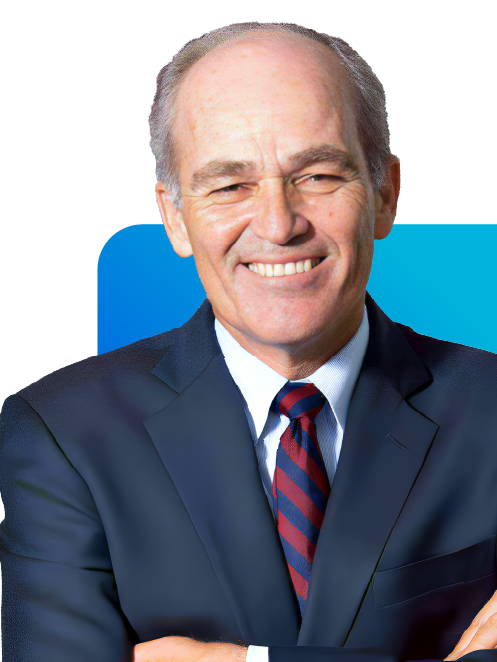
Mark Cutifani CBE is a globally respected mining executive with over 48 years of experience across six continents, 20 countries, and more than 30 minerals and metals. Trained as a mining engineer, he is best known for his transformational leadership as Chief Executive of Anglo American (2013–2022).
During this period, he led a major restructuring that delivered industry-leading results, including an average annual shareholder return of 22%, a doubling of productivity, and a 40% reduction in real unit costs, while repositioning the company as a leader in sustainability and innovation.
Previously, he served as CEO of AngloGold Ashanti, successfully turning around the business, and held senior executive roles at Vale, Rio Tinto, and other major mining groups. A former President of the International Council on Mining and Metals and the South African Chamber of Mines, he has received numerous global honors for leadership, sustainability, and innovation, including a CBE in 2024 for contributions to global mining investment.
He currently serves as a Non-Executive Director of TotalEnergies, chairs and advises several global initiatives, and remains actively involved in ethical, sustainable, and socially responsible business leadership.
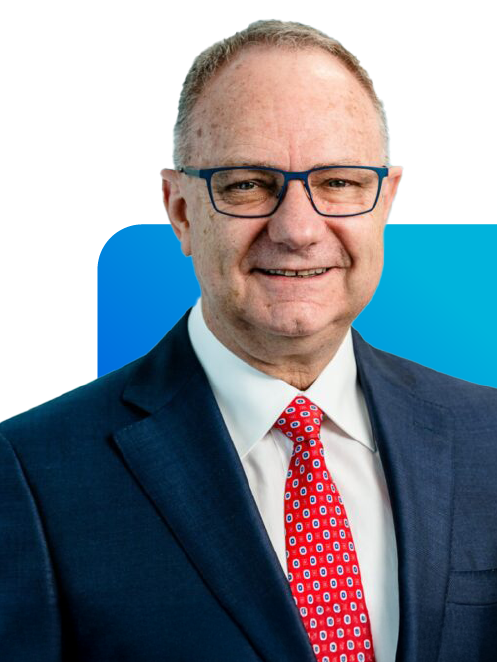
Sonia Scarselli joined Endeavour in January 2025 as Executive Vice President, Exploration.
Prior to joining Endeavour, she led BHP’s Metals Exploration division and the company’s innovative accelerator program, BHP Xplor, with a focus on developing transformative and collaborative approaches to expand future growth opportunities. She was appointed Vice President of BHP Xplor in June 2022, and in September 2023 her role was expanded to include leadership of BHP’s Exploration organisation.
Sonia joined BHP in 2012 and held several senior leadership roles within BHP Petroleum, including Vice President of Exploration and Appraisal, Head of Algeria, and Exploration Manager for Trinidad and Tobago. As part of the BHP Xplor team, she received the 2024 AME Murray Pezim Award in recognition of the program’s success in pioneering innovative approaches to financing and supporting mineral exploration. She was also named one of the 100 Global Inspirational Women in Mining in 2024.
Sonia began her career at ExxonMobil UK and currently serves as an advisor to Deep Energy Capital LLP, CEOs Against Cancer Chapter, and the AAPG Advisory Council.

Rohitesh “Ro” Dhawan is the President and Chief Executive Officer of the International Council on Mining and Metals (ICMM). He leads the Council of 26 CEOs of the world’s largest mining & metals companies in voluntary leadership actions that raise the standards of responsible mining.
Under his leadership, ICMM has undertaken landmark commitments and action on critical sustainable development issues, including the first industry-wide commitment to achieving net zero greenhouse gas emissions, the first collective commitment of any sector on nature positive, pioneering actions on diversity, equity and inclusion, and significant steps towards transparency of the industry’s contribution and performance, including on tax and contract disclosure.
Ro is a Fellow and faculty member of the Africa Leadership Initiative and a Raisina fellow at the Asian Forum on Global Governance. He serves on the Advisory Boards of the Columbia Centre for Sustainable Investment, Concordia, and Resolve. He has served on the UK Government’s Partnering for Accelerated Climate Transitions (PACT) Programme and was named one of South Africa’s climate change leaders for his work with the country’s mining sector.
Ro hold a Master’s in Environmental Change & Management from the University of Oxford in the UK and an undergraduate degree in Economics from Rhodes University in South Africa.

Beau Lotto is a renowned neuroscientist, international keynote speaker, and professor, globally recognized for his work on how we perceive the world and how perception shapes creativity, innovation, and decision-making.
He is the founder and CEO of two companies: Lab of Misfits, the world’s first neurodesign studio, and Ripple, a company that holds multiple patents in Augmented Reality (AR) technologies.
In academia, he served as a professor at University College London for more than 20 years. He is currently a professor at the University of London and a visiting scholar at New York University (NYU).
He has been a TED main-stage speaker three times, with his talks accumulating more than 10 million views. He has also delivered keynote presentations for leading global companies such as Microsoft, Google, Apple, and Universal, among others.
His presentations are visually striking, highly interactive, and accessible, inspiring global audiences to reframe challenges and opportunities by seeing them from new perspectives.
The author of “Deviate: The Science of Seeing Differently”

A lawyer graduated from the Catholic University of Santa María – Arequipa, specializing in Mining, Environmental, Administrative, Corporate, Contract and Commercial Law; project financing and permits. She has worked at Sociedad Minera Cerro Verde S.A.A. since 1997, holding several important positions.
In April 2012, she assumed the position of Vice President of Corporate Affairs and continues to be responsible for the Legal, Government Relations, Public and Community Relations, Social Planning, and Energy areas.
Currently, she also serves as Secretary of the Board of Directors of Sociedad Minera Cerro Verde S.A.A., Director of the Cerro Verde Association, responsible for managing the company’s voluntary contributions, and President of the National Society of Mining, Petroleum and Energy (2025-2026).
Member of the Water Pact, Past-President of the Board of Directors of the Peruvian Foreign Trade Society COMEXPERÚ 2022-2024. Member of ABAC and Chair of the APEC Business Advisory Council (ABAC) 2024. Director of the Sustainable Peru Association 2021-2025. Director of AMCHAM. Co-Chair of the APEC Business Advisory Council 2025.

Flavia Tata Nardini is Co-founder and CEO of Fleet Space Technologies, one of Australia’s most exciting startups. As a real-life rocket scientist and former propulsion test engineer at the European Space Agency, Flavia holds two patents and has contributed to a broad range of innovative space projects. Along with her team, she is working hard towards launching a constellation of small satellites to enable high-value, real-time applications in industries such as mining, exploration, and defence.
Flavia’s recent achievements include her role as Board of Director at Austmine, Mission Chair of the 7Sisters Moon Mission, Chair of the Australian Space Agency Space Industry Leaders Forum, Vice Chair of AmCham SA Council of Governors, and Adjunct Professor of UniSA. She also recently graduated from the AICD Corporate Program. A strong advocate for women in STEM, Flavia regularly speaks at events and empowers the next generation of leaders.

Bent Flyvbjerg is Professor Emeritus at Saïd Business School, University of Oxford, and at the IT University of Copenhagen. He is an economic geographer by training.
He is co-author, together with Dan Gardner, of the book How Big Things Get Done: The Surprising Factors That Determine the Fate of Every Project (2023). The book examines why most large projects fail and proposes practical principles to successfully deliver large-scale initiatives with reduced uncertainty.
He is internationally recognized as “the world’s leading expert on megaprojects,” according to the global consulting firm KPMG.He is Chair and co-founder of Oxford Global Projects, an initiative dedicated to improving the planning and delivery of megaprojects worldwide. Throughout his career, he has advised governments including those of the United States, the United Kingdom, the Netherlands, and Denmark, as well as Fortune 500 companies, multilateral banks, and international organizations such as the European Commission and the United Nations.
In recognition of his global impact, he was knighted by Her Majesty Queen Margrethe II of Denmark in 2002.
